Quanzhou
Quanzhou is a famous coastal city in southeast of Fujian Province, on the north bank of Jin River. Its border Putian City in the north, facing Taiwan Strait in the east, and Xiamen City in the south. Quanzhou is an important trade centre and cultural exchange in the China history. In older English works, its name may appear as Chinchew or Chinchu or Zayton.
Since reign of Song Dynasty (960-1279), Quanzhou was one of largest port in the world, and as a starting point of Maritime Silk Road. Cultural exchange and religion diversity among trader and local leaving magnificent sites, including Kaiyuan Temple, Qingjing Mosque, Luoyang Bridge, and Anping Bridge.
Quanzhou Tourist Destination
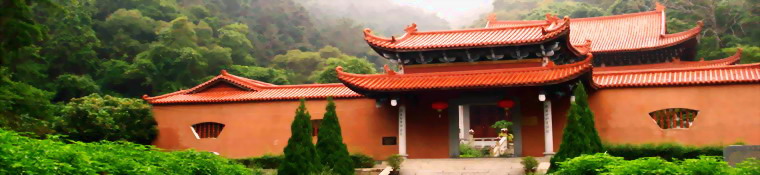
Kaiyuan Temple is located in the West Street of Quanzhou City, it was built in 686 AD during Tang Dynasty. Designed with great architecture, the temple has exotic artistic features. There are one hundred stone pillars supporting the roof, which are carved with sacrificial objects. Kaiyuan Temple stands between two magnificent pagodas, both of them are well preserved stone pagodas and regarded as a special landmark of Quanzhou City. The East Tower named Zhenguo Tower with 48 meters (158 feet) high, while The West Tower called Renshou Tower with 44 meters (145 feet) high. Most part of the scenic area were carved and painted with Buddhist symbols, such as arhats, guardian deities, and ancient warriors.
As one of earliest mosque in China, Qingjing Mosque in Tumen Street was built in 1009 AD during Northern Song Dynasty (960-1127). Qingjing Mosque presenting Arabian architecture style, especially from Damascus in Syria, which is mainly constructed from granite. Qingjing Mosque which mean Mosque of Purity, also known as Shengyou Mosque ( Mosque of Holy Friend ), and Ashab Mosque (Mosque of Prophet's Companion). This Mosque is a symbol of cultural exchange and good relationship between China and Arabic countries.
Luoyang Bridge is the first sea port bridge in China, it spans from suburb of Quanzhou City to Luoyang River. The bridge was built during Huangyou of Northern Song Dynasty in 1053 AD and was completed five years later. This stone bridge has 834 meters length, 5 meters width, 7 meters high and 46 bridge piers. The northern part of Luoyang Bridge stands the statue of Caixiang with 12 meters high, and Caixiang Memorial Temple which is lying a tablet that noted the history of the bridge. There are Zhaohui Memorial Hall in the southern part of the bridge, where the people worship the Dragon King who guard the bridge.
Located in the northern part of Quanzhou City, Qingyuan Mountain offers the combination of wonderful scenery and historical sites. Qingyuan (Clear Water) Mountain known for its springs, beutiful peaks, exotic rock, and 36 kind of caves. The most impressive sight is sitting statue of Laozi, the founder of Taoism. The ancient statue was carved upon natural rock during the Song Dynasty, it has 5.5 meters (16.5 feet) high and 7.3 (22 feet) width.
Quanzhou Geography
Quanzhou is a coastal prefecture bordered by Xiamen sub-provincial city to the south west. It also forms another border with Zhangzhou and Longyan prefecture level city towards the west. Putian and Fuzhou form Quanzhou's northeast border and Sanming forms the northern one. Quanzhou is mountainous and has many rivers and tributaries originating from the interior.
Quanzhou History
Quanzhou was established in 718 during the Tang Dynasty (618–907). In those days, Guangzhou was China's greatest seaport, but this status would be surpassed later by Quanzhou. During the Song Dynasty (960–1279) and Yuan Dynasty (1279–1368), Quanzhou was one of the world's largest seaports, hosting a large community of foreign-born inhabitants from across the Eurasian world.
Due to its reputation, Quanzhou has been called the starting point of the Silk Road via the sea. From the Arabic name form of the city, Zayton, the word satin would be minted. In The Travels of Marco Polo, Quanzhou (called Zayton, T'swan-Chau or Chin-Cheu) was listed as the departure point for Marco Polo's expedition to escort the 17-year-old Mongol princess bride Kököchin to her new husband in the Persian Ilkhanate. In 1357 however a military revolt by the local Persian militia led to a ten-year rebellion that resulted in large civilian casualties in Quanzhou.
Of the Chinese Li family in Quanzhou, Li Nu, the son of Li Lu, visited Hormuz in Persia in 1376, married a Persian or an Arab girl, and brought her back to Quanzhou. He then converted to Islam Li Nu was the ancestor of the Ming Dynasty reformer Li Chih. Quanzhou Overseas Relations Museum preserves a number of relics related to the Quanzhou's era as a major seaport. A particularly important exhibit is the so-called Quanzhou ship, a sea-going junk that sunk some time after 1272, and was recovered in 1973–74. Quanzhou is also a migration source of many Overseas Chinese living in South East Asia and to Taiwan during the last couple of centuries.
Quanzhou Dialect
Local people speak a variant of Hokkien which is similar to Amoy and Taiwanese. In Mandarin Chinese this dialect is called "Minnan Hua", which can be translated as "the language of South Fujian". It is essentially the same dialect spoken in Xiamen and Zhangzhou, and it bears little similarity with the official Chinese Mandarin.
Quanzhou Economy
Quanzhou is a major exporter of agricultural products such as tea, banana, lychee and rice. It is also a major producer of quarry granite and ceramics. Other industries include textiles, footwear, fashion and apparel, packaging, machinery, paper and petrochemicals. Quanzhou is the biggest automotive market in Fujian, it has the highest number of private automobile possession.
Colleges and universities
-
Huaqiao University (national)
-
Quanzhou Normal University (public)
-
Quanzhou Medical College (public)
-
Yang-en University (private)
Quanzhou Cultures
-
Liyuan Opera
-
Puppet Show
-
Gaojia Opera