Fuzhou
Fuzhou is the capital city of Fujian Province, located on southeastern coast of China and in the vicinity of the Min River. Beside its role as center of economy, culture, politic and transportation of Fujian Province, Fuzhou also important hub between Hong Kong and Shanghai. Fuzhou, which mean "prosperous city" also known as "Banyan City" (Rong Cheng) refer to subtropical banyan trees that were planted since Song Dynasty (960-1279).
An ancient city with more than 2000 years old; Fuzhou is a land where histories, cultures and traditions were carved upon. Fuzhou’s history dates back to the 3rd century AD, when it became a center of ore smelting. Thereafter it was capital, known as Minzhou, of the coastal kingdom of Minyue. When it was absorbed into the Tang dynasty, Fuzhou acquired its present name, which mean “prosperous city” or “fortunate city.” Marco Polo is supposed to have passed through Fuzhou around 13th century. He described it as a great center of international commerce with special links to the Indian trade, prosperous, with great gardens and an abundance of fruit.
In the eastern part of Fuzhou, there is Fuzhou Plain while other area are mainly mountainous. Min River (Minjiang) is the largest river in Fujian, flows through the city from the west to the east. Along the coast, there are many seaports and islands, with Haitan Island is the biggest island in Fuzhou. Due to its geographical location, the climate is pleasant--warm and humid with a yearly average temperature of 19.6C (70F).
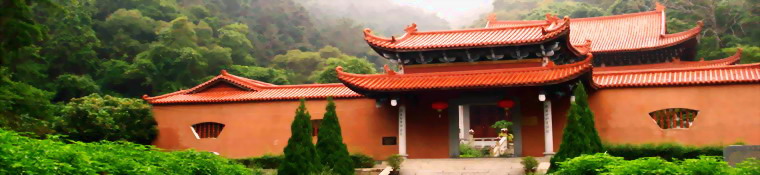
The climate of Fuzhou is comfortable, affording tourists the opportunity to visit the city all year round, however the best time to visit is between April and November. Among the scenic attractions in the Fuzhou region are the Gu Mountain Scenic Area and the nearby Yongquan Temple, the fine Xichan Temple, and the Qingyun Mountain Scenic Area, which is famous for its superb mountain scenery and waterfalls.
Fuzhou is known as tourist destination city which is surrounding by three verdant hills, The Yu, Wu and Ping that form a triangular shape. Still in the vicinity of triangular hills, there are two temples that facing each other, The Fuzhou White Pagoda (Baita) and Fuzhou Black Pagoda (Wuta). The three hills and two pagodas are amazing landscapes and perfectly match as the symbol of Fuzhou City.